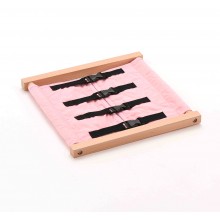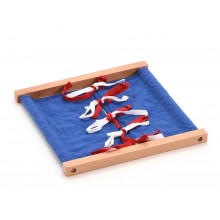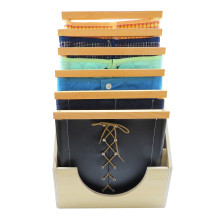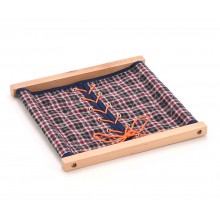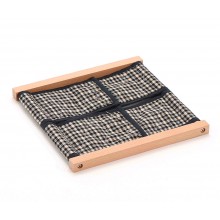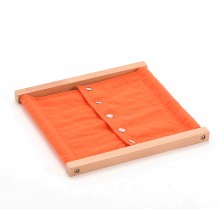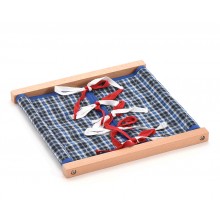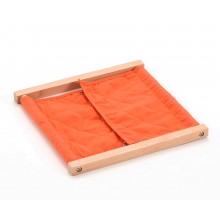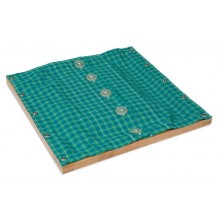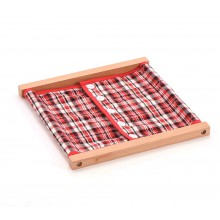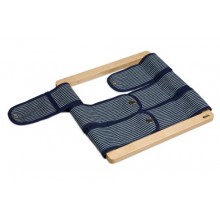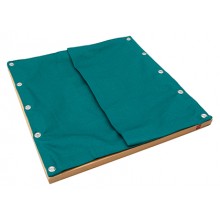

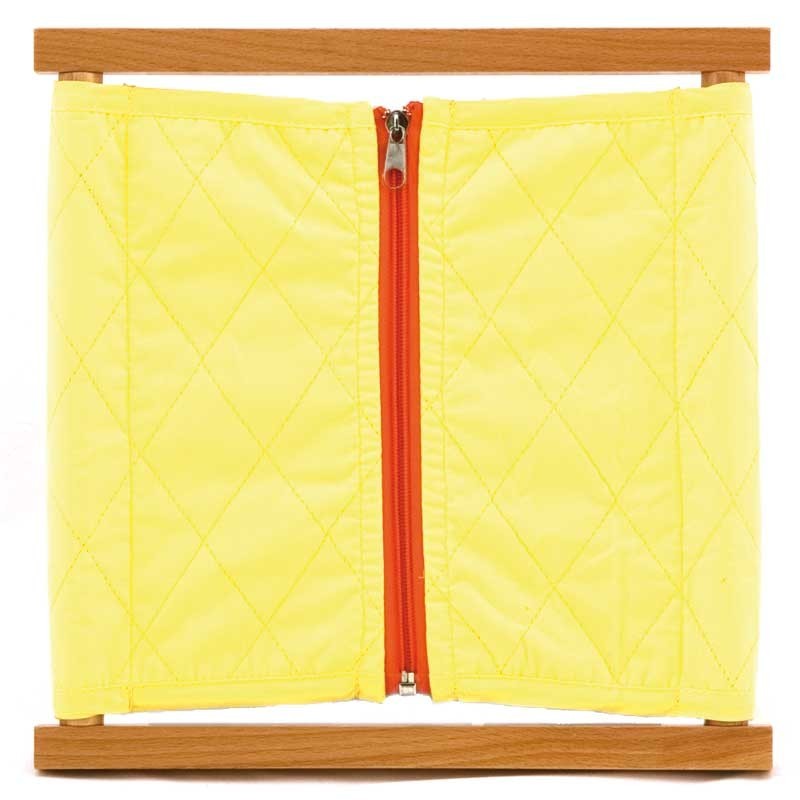
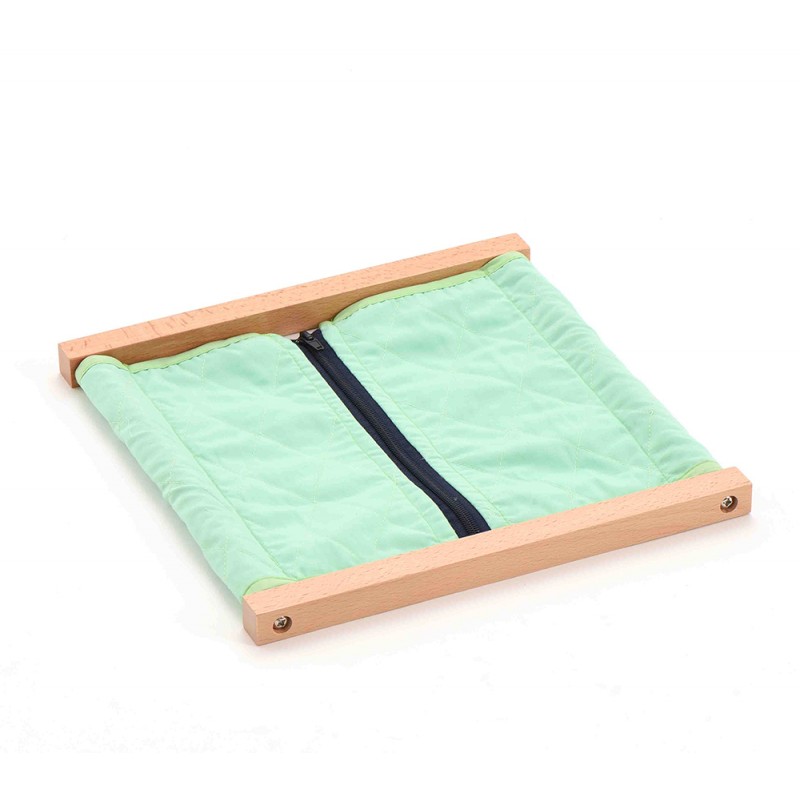


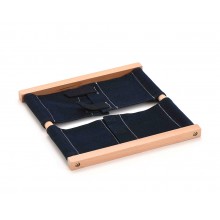
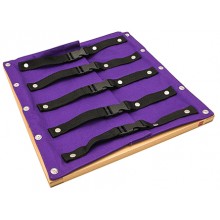
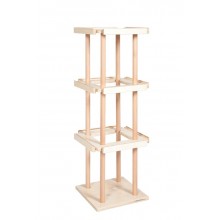
With the Montessori dressing frame with zipper, children practice the controlled opening and closing of an everyday clothing fastener. Also known as fastening frame or dressing frame the frame supports fine motor skills, bilateral coordination, and independent dressing. The screwed wooden frame can be opened to remove or replace the fabric for cleaning.
Please note:
Montessori materials are NOT toys, but educational materials. Proper use requires appropriate training.
Montessori materials may contain small, rough, sharp, or other elements that could cause injury or damage if used improperly.
It may therefore only be used by children under the supervision of appropriately trained persons and in an appropriate environment.
Zippers are encountered by children on jackets, vests, bags, and other everyday items. The Montessori zipper frame provides a clear practice area to learn and repeat the necessary hand movements calmly.
The child holds the fabric with one hand and grabs the zipper pull with the other. By pulling deliberately, it moves the slider along the zipper chain and observes how the two sides connect or separate. In doing so, it practices stabilizing the fabric and executing the pulling motion in a controlled manner.
The dressing frame keeps the practice area in a fixed place. This allows the child to focus on the coordination of their hands. Repeatedly opening and closing helps them gain confidence in handling the zipper. These experiences can then be transferred to suitable zippers on clothing and bags.
The wooden frame is screwed together. After loosening the screws, the fabric can be removed for cleaning or replaced with another suitable closure fabric. This allows a frame to facilitate various exercises and saves space in the prepared learning environment.
Applications
For kindergarten, school, and the prepared Montessori learning environment, as well as for guided practice at home. The dressing frame is suitable for learning and reinforcing independent handling of zippers.
Application note
The educator demonstrates holding the fabric and moving the slider slowly. Then the child performs the demonstrated steps independently. Through repeated opening and closing, it gradually discovers the functional principle of the zipper.
Self-assessment
With the zipper closed, the two sides are continuously connected to each other. If a spot is left open or fabric is caught, the child can recognize this and correct their work. A stuck slider is carefully returned before the closure is closed again.
Product details
Learning areas
Fine motor skills, bilateral coordination, targeted use of force, movement control, concentration, and independent dressing.
With the Montessori dressing frame with zipper, children practice the controlled opening and closing of an everyday clothing fastener. Also known as fastening frame or dressing frame the frame supports fine motor skills, bilateral coordination, and independent dressing. The screwed wooden frame can be opened to remove or replace the fabric for cleaning.