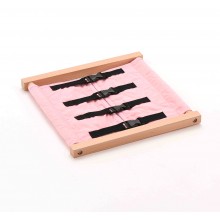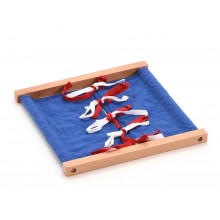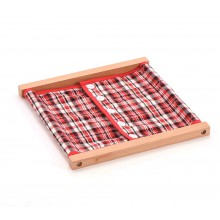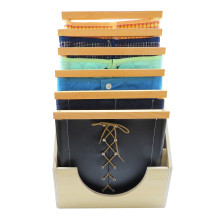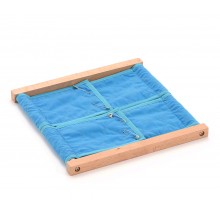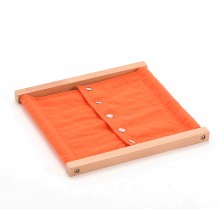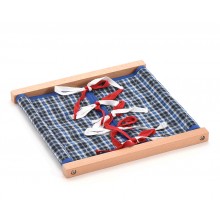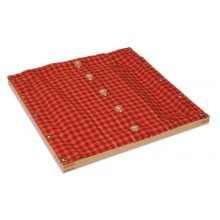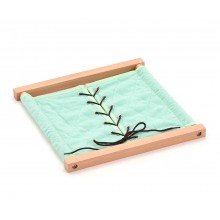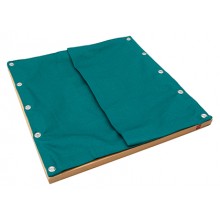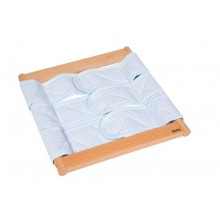

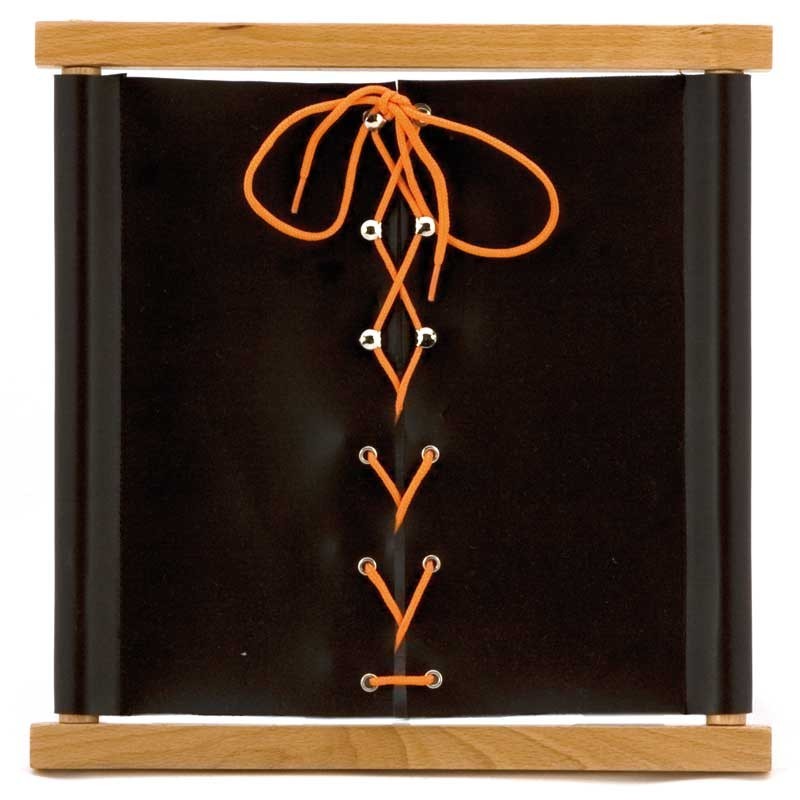
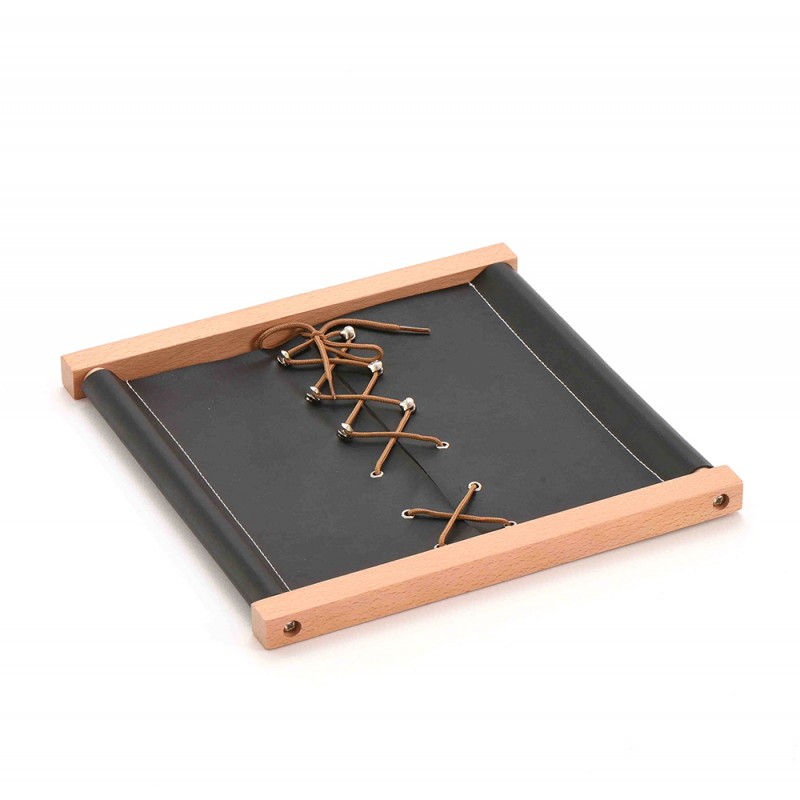


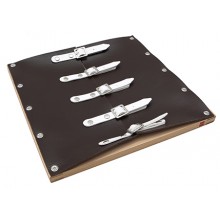
With the Montessori dressing frame with shoelace, children practice threading, lacing, and tying a shoelace. Also known as closure frame or dressing frame the frame supports fine motor skills, bilateral coordination, and independent dressing. The screwed wooden frame can be opened to remove or replace the fabric for cleaning.
Please note:
Montessori materials are NOT toys, but educational materials. Proper use requires appropriate training.
Montessori materials may contain small, rough, sharp, or other elements that could cause injury or damage if used improperly.
It may therefore only be used by children under the supervision of appropriately trained persons and in an appropriate environment.
Being able to lace and tie shoes by oneself is an important step towards independence. The Montessori lacing frame with shoelaces provides a clear practice area for this. The child can calmly try out the individual hand movements while the frame keeps the fabric sides in place.
When lacing, the child threads the shoelace through the designated openings and connects the two sides together. They practice deliberately grasping the ends of the lace, pulling through, and tightening the lacing evenly. Afterwards, tying knots and making a bow can be practiced. Also, loosening and pulling out the shoelace is part of working with the material.
A slow demonstration helps to understand the process. Individual steps can initially be repeated separately and later combined. The experiences gained from the dressing frame can then be transferred to lacing and tying their own shoes.
The wooden frame is screwed together. After loosening the screws, the fabric can be removed for cleaning or replaced with another suitable closure fabric. This allows a frame to facilitate various exercises and saves space in the prepared learning environment.
Areas of application
For kindergarten, school, and the prepared Montessori learning environment, as well as for guided practice at home. The dressing frame is suitable for learning and reinforcing the handling of shoelaces.
Application note
The educator demonstrates threading slowly at one to two openings first. Then the child continues the lacing by themselves. Knotting and bow tying are shown as further steps and practiced according to the learning level.
Self-assessment
The child checks whether the shoelace is threaded through the designated openings and connects both sides evenly. If openings are missing or the lacing is uneven, it can correct the work. The result of the bow tying is shown by whether the bow holds and can be opened again by pulling on the ends of the ribbon.
Product details
Learning areas
Fine motor skills, bilateral coordination, hand-eye coordination, action planning, concentration, and independent dressing.
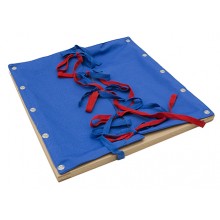
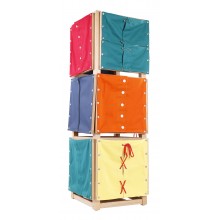
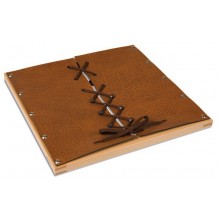
With the Montessori dressing frame with shoelace, children practice threading, lacing, and tying a shoelace. Also known as closure frame or dressing frame the frame supports fine motor skills, bilateral coordination, and independent dressing. The screwed wooden frame can be opened to remove or replace the fabric for cleaning.