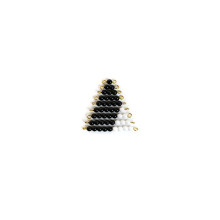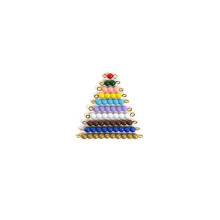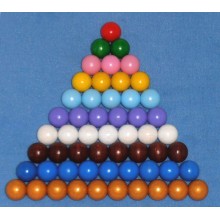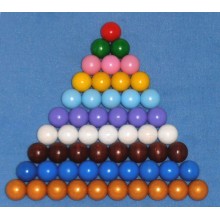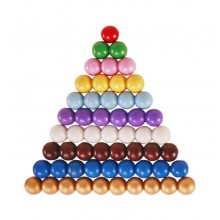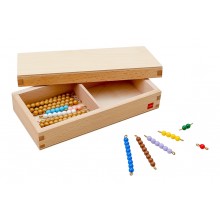

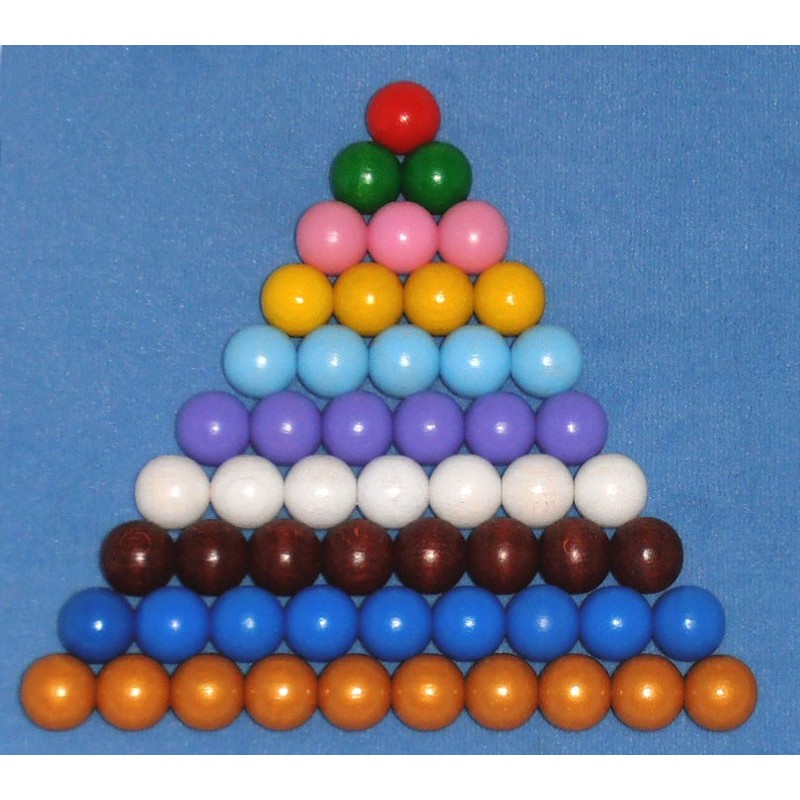
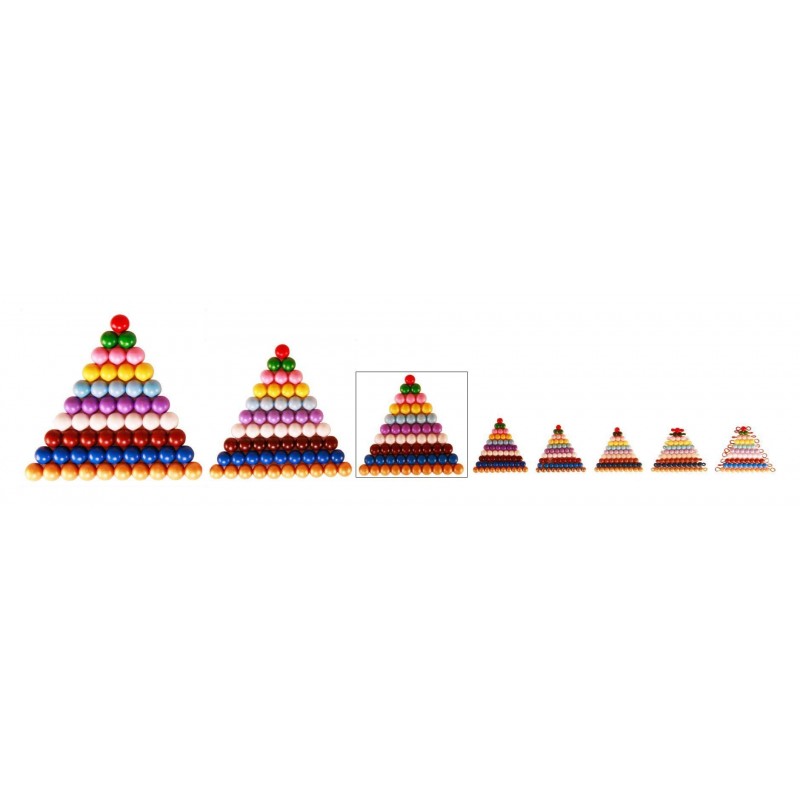


The pearl staircase with 15 mm wooden beads makes numbers and quantities from 1 to 10 visual and comprehensible.
The bead rods in Montessori colors support counting, comparing, breaking down numbers, and solving initial math problems.
A versatile Montessori math material for kindergarten, elementary school, and individual support.
Please note:
Montessori materials are NOT toys, but educational materials. Proper use requires appropriate training.
Montessori materials may contain small, rough, sharp, or other elements that could cause injury or damage if used improperly.
It may therefore only be used by children under the supervision of appropriately trained persons and in an appropriate environment.
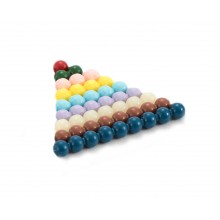
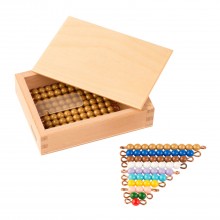
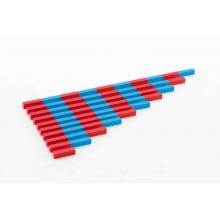
The Montessori bead stair with 15 mm wooden beads supports children in developing an understanding of numbers and quantities. It consists of bead rods from 1 to 10 in Montessori colors.
When placing and arranging the bead rods, relationships between number, quantity, and length become visible. This creates a clear foundation for calculation.
The bead staircase offers a variety of ways to explore the number range up to 10 Children can discover quantities and trace calculation paths with the material.
Possible exercises:
Represent and match numbers and quantities from 1 to 10
Count beads and create number sequences
Compare quantities: more, less, and the same amount
Arrange bead rods lengthwise to the staircase
Break down numbers, for example, 6 into 2 and 4
Discover complements up to 10
Practice addition and subtraction visually
The bead stair is suitable for the Montessori pedagogy, kindergarten, elementary school, and individual support. The exercises can be adapted to the child's learning level – from the first introduction to quantities to independently solving simple arithmetic problems.
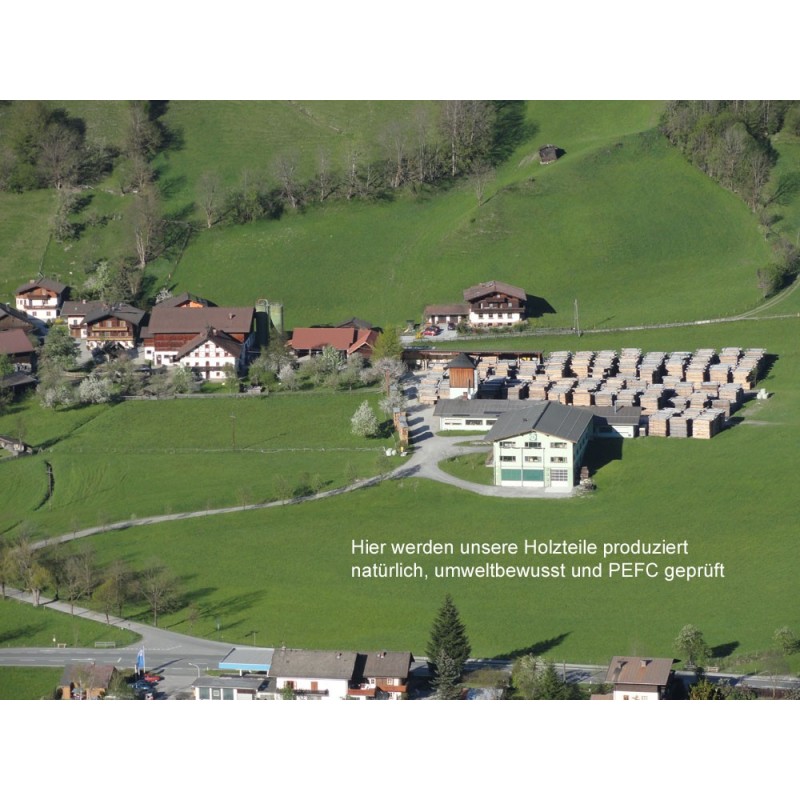
The bead stair is produced in Austria. Used are PEFC-certified wooden beads.
Product features:
Bead rods for the numbers 1 to 10
Color design in Montessori colors
Wooden beads with a diameter of 15 mm
For counting exercises, quantity comparisons, and number decomposition
For a visual representation of basic arithmetic problems
Manufactured in Austria
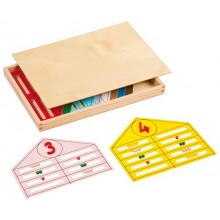

The pearl staircase with 15 mm wooden beads makes numbers and quantities from 1 to 10 visual and comprehensible.
The bead rods in Montessori colors support counting, comparing, breaking down numbers, and solving initial math problems.
A versatile Montessori math material for kindergarten, elementary school, and individual support.