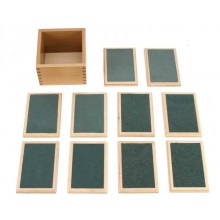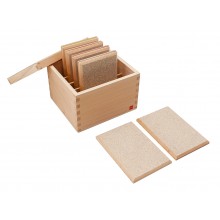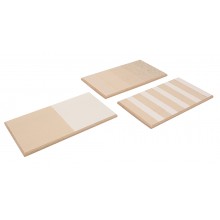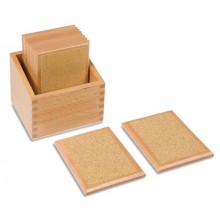

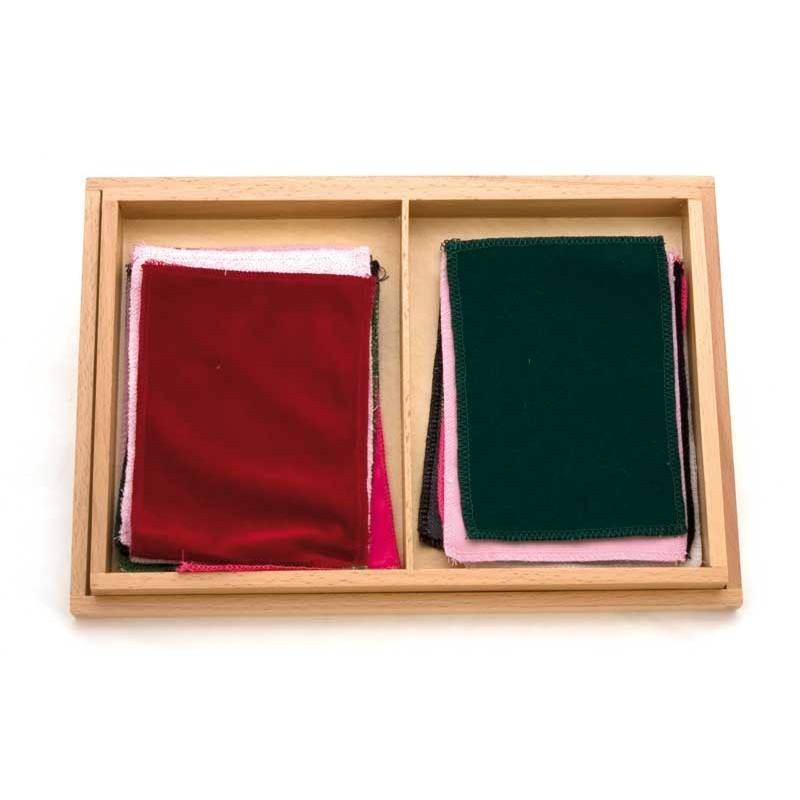

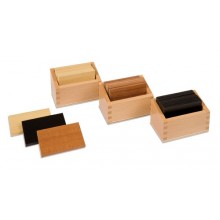
The Montessori fabric box contains ten pairs of fabric, which differ in color and texture. Children compare the textiles with their hands and look for two matching pieces of fabric. The sensory material supports tactile perception, concentration, and the naming of different fabric properties.
Please note:
Montessori materials are NOT toys, but educational materials. Proper use requires appropriate training.
Montessori materials may contain small, rough, sharp, or other elements that could cause injury or damage if used improperly.
It may therefore only be used by children under the supervision of appropriately trained persons and in an appropriate environment.
With the box of fabrics children discover how differently textiles feel. They take individual pieces of fabric between their fingers, examine their surface, and compare the texture. Then they look for the matching fabric and place the two pieces together as a pair.
The different fabrics provide opportunities to perceive and describe properties such as smooth and rough, soft and firm, or thin and thick The child learns to feel accurately and to compare their sensory impressions.
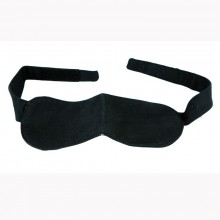
At the beginning, a small selection of distinctly different fabric pairs can be laid out. As confidence increases, the selection is expanded. When pairing with closed eyes, attention is specifically directed to the sense of touch. The different colors fade into the background.
Conversations about clothing, curtains, or other textiles connect the experiences with everyday life. After the exercise, the fabric pairs are sorted back in the box. Thus, the Montessori material connects sensory perception with verbal expression and careful work.
Areas of application
For kindergarten, Montessori children's house, and the prepared learning environment at home. Suitable for tactile exercises, pairing, and word lessons on fabric properties.
Self-control
After pairing, the child compares both fabric pieces again by feeling and observing. If the texture and color match, the pair is correctly matched. Differences prompt a re-examination and a search for another counterpart.
Product details
Learning areas
Tactile perception, differentiation of fabric properties, pairing, concentration, vocabulary, and material organization.
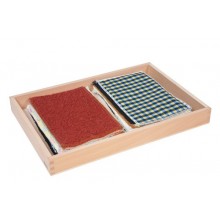
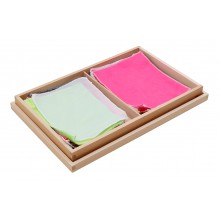
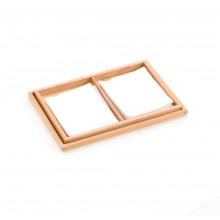

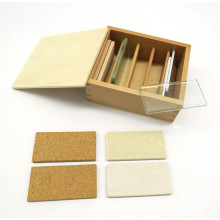
The Montessori fabric box contains ten pairs of fabric, which differ in color and texture. Children compare the textiles with their hands and look for two matching pieces of fabric. The sensory material supports tactile perception, concentration, and the naming of different fabric properties.