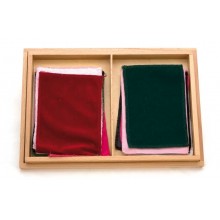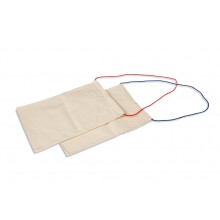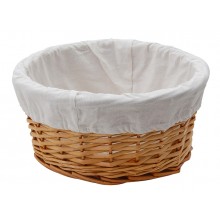

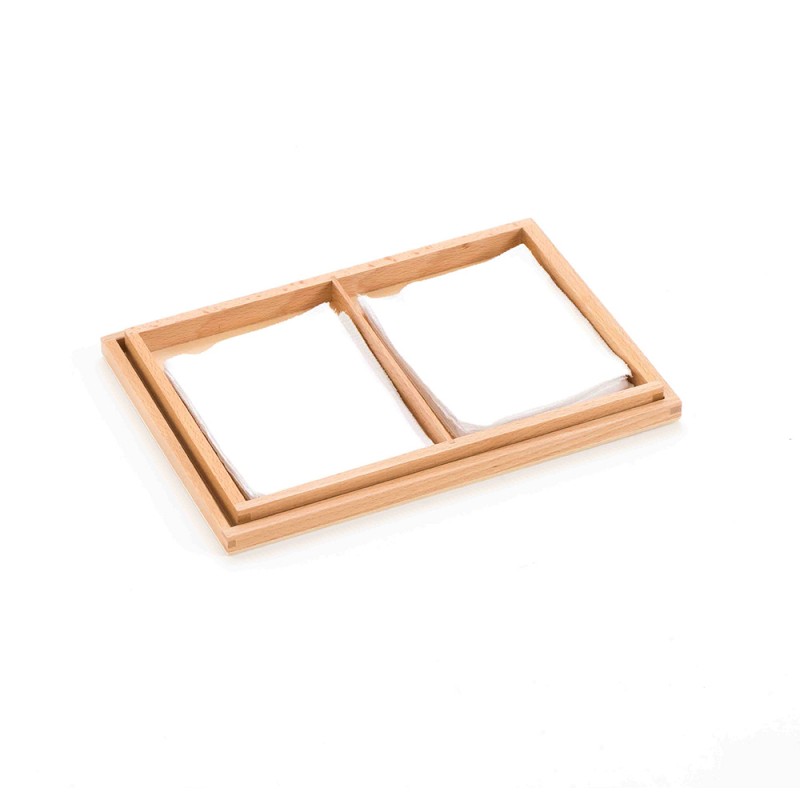

The white Montessori fabric box contains ten pairs of fabric, which differ in their texture. All fabric pieces are white, so the color gives no indication of the pairing. As a further stage to the colored fabric box, the material supports the precise perception and distinction of textiles through touch.
Please note:
Montessori materials are NOT toys, but educational materials. Proper use requires appropriate training.
Montessori materials may contain small, rough, sharp, or other elements that could cause injury or damage if used improperly.
It may therefore only be used by children under the supervision of appropriately trained persons and in an appropriate environment.
The box with white fabrics deepens the work with the Montessori fabric pairs. While the colored fabric box also contributes to orientation through color, all fabric pieces here are the same color. The child focuses more on the texture of the different fabrics.
It takes a piece of fabric between its fingers, examines its surface, and looks for a second piece with the same texture. Through careful comparison, ten matching pairs are created. Differences such as smooth and rough, soft and firm, or thin and thick can be perceived and described verbally.
The exercise can initially be carried out with a small selection and gradually expanded to all fabric pairs. When working with closed eyes, the visible fabric structure also recedes into the background. The child then purposefully uses its sense of touch to find the matching fabric pieces.
As an advanced stage to the box with colored fabrics this material offers a more challenging pairing task. It combines differentiated feeling with concentration, precise comparison, and the development of a vocabulary for textile properties.
Application possibilities
For kindergarten, Montessori children's house, and the prepared learning environment at home. Suitable for deepening known fabric pair exercises and for word lessons on fabric properties.
Self-control
The child feels both fabric pieces of an assigned pair again and compares their fabric structure. During the subsequent observation, it can additionally verify the assignment. Since all fabric pieces are white, the control is based on the texture of the fabric.
Product details
Learning areas
Tactile perception, fabric differentiation, pairing, concentration, and vocabulary related to fabric properties.
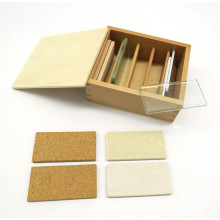

The white Montessori fabric box contains ten pairs of fabric, which differ in their texture. All fabric pieces are white, so the color gives no indication of the pairing. As a further stage to the colored fabric box, the material supports the precise perception and distinction of textiles through touch.