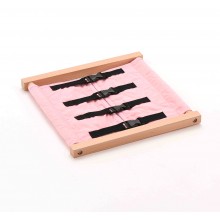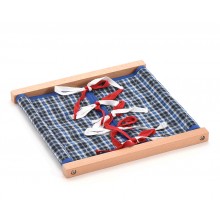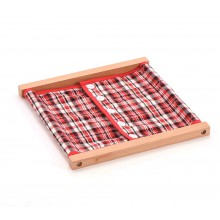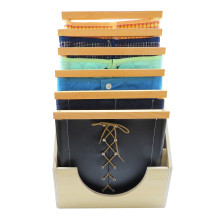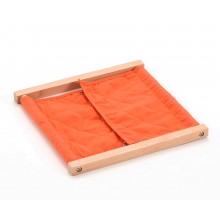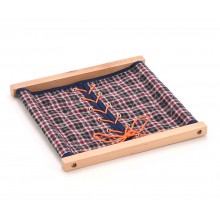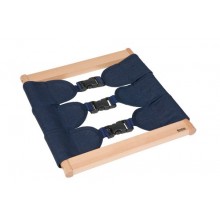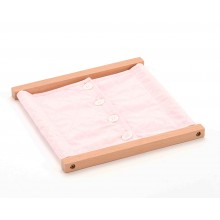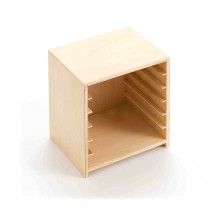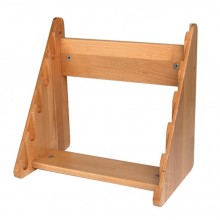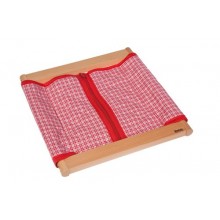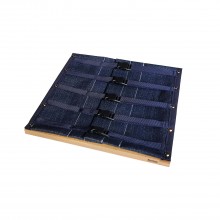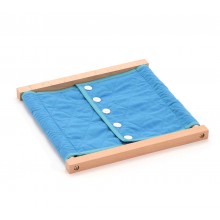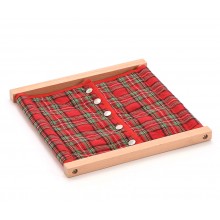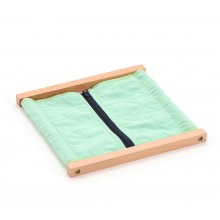

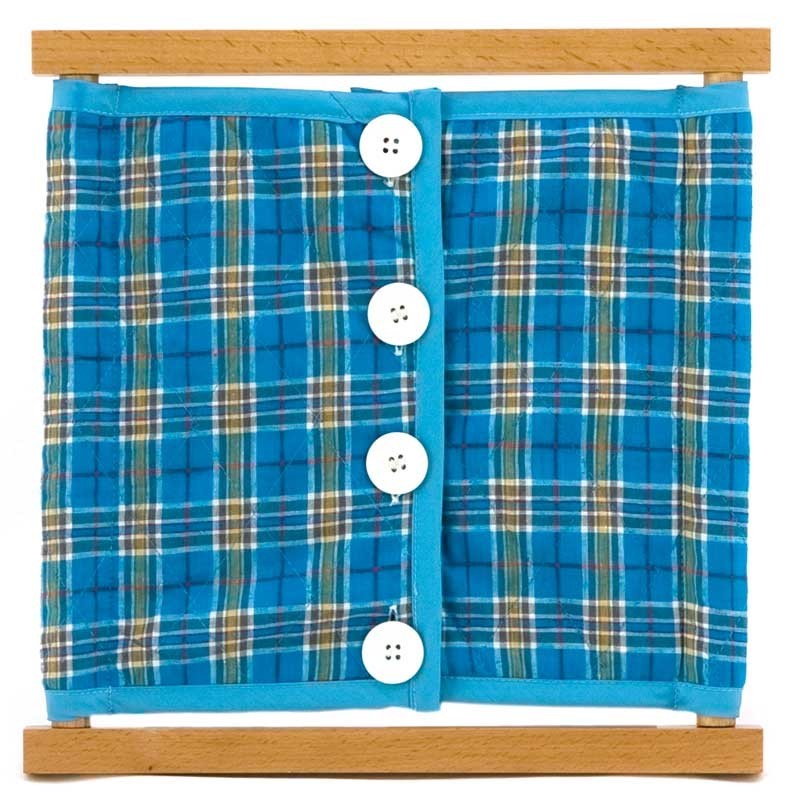


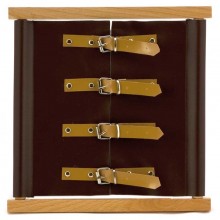
With the Montessori dressing frame with large buttons, children practice buttoning and unbuttoning. The large buttons make it easier to grasp and provide an introduction to working with button closures. The frame, also known as closure frame or dressing frame supports fine motor skills, bilateral coordination, and independent dressing.
Please note:
Montessori materials are NOT toys, but educational materials. Proper use requires appropriate training.
Montessori materials may contain small, rough, sharp, or other elements that could cause injury or damage if used improperly.
It may therefore only be used by children under the supervision of appropriately trained persons and in an appropriate environment.
The Montessori fastening frame with large buttons makes buttoning an understandable everyday activity. The large buttons are easy to grasp and allow children to attentively follow the individual movements when opening and closing.
To button up, the child holds the fabric at the buttonhole, guides the button through the opening with its edge, and pulls it all the way through. When unbuttoning, the process is reversed. Both hands work together: one hand stabilizes the fabric while the other guides the button.
The dressing frame keeps the fabric sides in a fixed place. This allows the child to focus on the fastening and repeat the hand movements calmly. The exercise prepares for independently buttoning jackets, vests, and other garments. With increasing confidence, work with a frame with small buttons can continue.
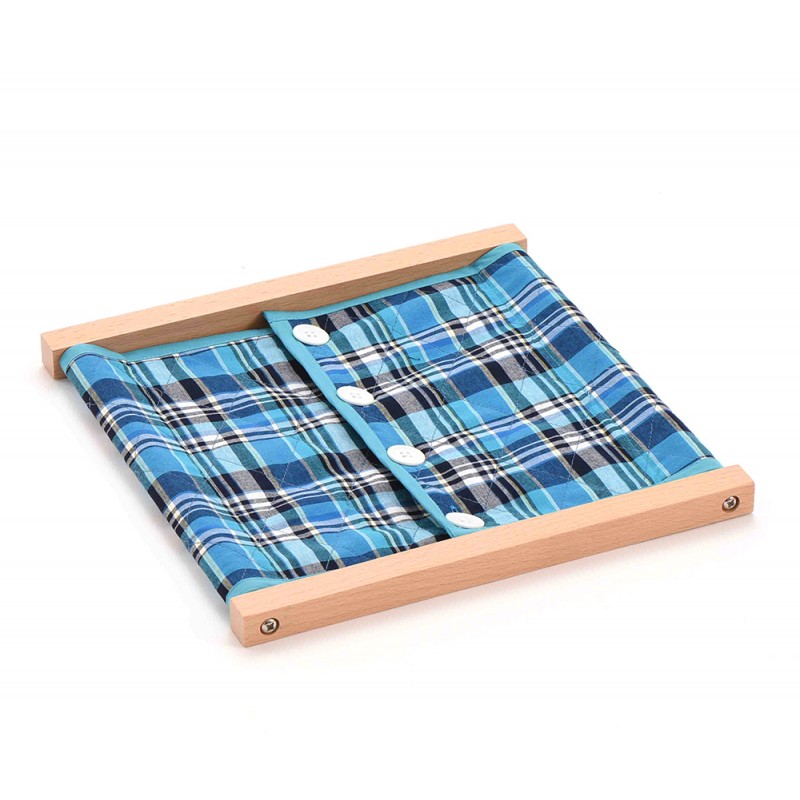
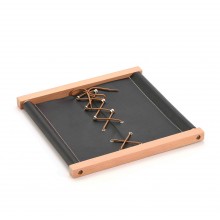
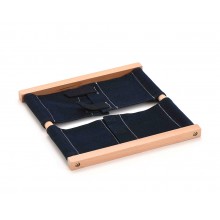
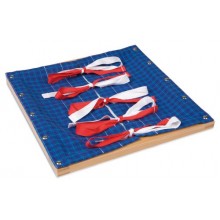
The 30 × 30 cm wooden frame is screwed togetherAfter unscrewing the screws, the fabric can be removed for cleaning or replaced with another suitable fastening material. This allows a frame to facilitate various exercises and saves space in the learning environment.
Applications
For kindergarten, school, and the prepared Montessori learning environment, as well as for guided practice at home. Particularly suitable for children who are learning to open and close buttons.
Application Note
The educator demonstrates the buttoning and unbuttoning slowly on one or two buttons at first. Then the child performs the demonstrated steps independently and continues working on the other fasteners. Through repetition, they gradually discover the functional principle of the button fastener.
Self-Check
Each button belongs in the opposite buttonhole. If all buttons are fully inserted and the fabric sides are evenly connected, the task is successful. If buttons remain open, are incorrectly assigned, or are only partially passed through the buttonhole, the child can check and correct their work.
Product details
Learning areas
Fine motor skills, targeted grasping, bilateral coordination, hand-eye coordination, concentration, and independent dressing.
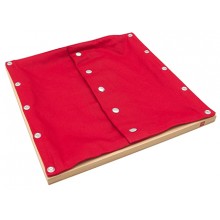

With the Montessori dressing frame with large buttons, children practice buttoning and unbuttoning. The large buttons make it easier to grasp and provide an introduction to working with button closures. The frame, also known as closure frame or dressing frame supports fine motor skills, bilateral coordination, and independent dressing.